

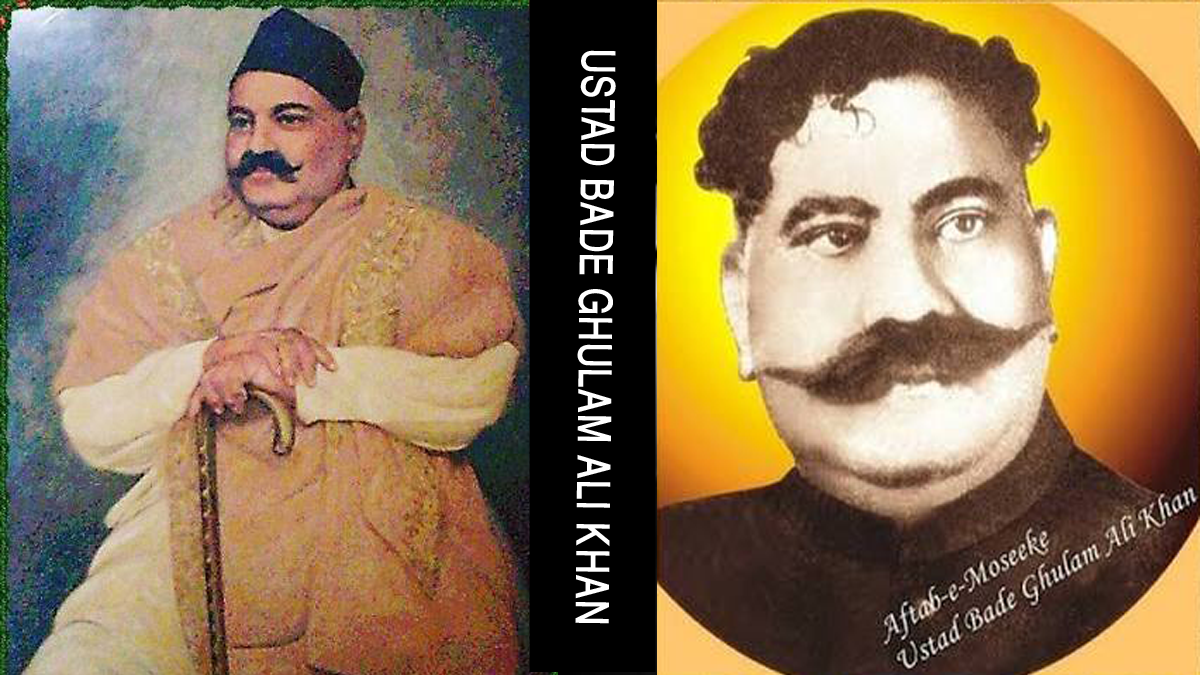
Ustad Bade Ghulam Ali Khan, legendary maestro of Hindustani classical music and the Patiala Gharana tradition.
Introduction
Among the most celebrated figures in the history of South Asian classical music, few names command as much admiration as Ustad Bade Ghulam Ali Khan. Revered for his extraordinary vocal mastery, artistic innovation, and profound emotional expression, he transformed the landscape of Hindustani classical music and left a legacy that continues to inspire musicians across generations.
A Musical Vision Beyond Boundaries
What made Ustad Bade Ghulam Ali Khan exceptional was his ability to unite diverse musical traditions into a distinctive style of his own. Music scholars often note that he amalgamated elements from several classical traditions, creating a unique Patiala-Kasur approach characterized by elegance, fluidity, and emotional depth.
His artistry brought together the strength and grandeur associated with Dhrupad, the intricate movements admired in the Jaipur tradition, and the refined embellishments of the Gwalior school. The result was a style that was technically brilliant while remaining deeply expressive and accessible.
The Magic of His Voice
Listeners were captivated not only by his technical excellence but also by the emotional power of his performances. His voice possessed remarkable flexibility, allowing him to move effortlessly through complex ragas while maintaining extraordinary clarity and beauty.
Whether performing a Khayal, Thumri, or devotional composition, he communicated feelings that transcended language and cultural boundaries. His music became a bridge connecting generations of listeners through a shared appreciation of beauty and artistic excellence.
A Rare Journey into Cinema
Although Ustad Bade Ghulam Ali Khan dedicated his life primarily to classical music, he is remembered for a unique contribution to one of Indian cinema’s greatest masterpieces, Mughal-E-Azam.
According to accounts associated with the film’s production, director K. Asif wished to feature the legendary maestro’s voice in the movie. Music director Naushad reportedly reminded him that the classical icon did not normally sing for films. Nevertheless, efforts were made to approach the maestro, resulting in a historic collaboration that remains one of the most celebrated moments in film music history.
His rendering of Prem Jogan Ban Ke demonstrated how classical artistry could enrich cinematic storytelling while maintaining its authenticity and dignity.
Admired by Generations
Many distinguished musicians and singers held Ustad Bade Ghulam Ali Khan in the highest regard. His influence extended beyond classical circles and touched artists working in various musical genres.
Rare photographs and historical accounts reveal the admiration he inspired among legendary performers, including Mohammed Rafi, whose own contributions to music remain cherished by millions around the world.
A Legacy That Lives On
The voice of Ustad Bade Ghulam Ali Khan continues to resonate through recordings, scholarly study, and the dedication of musicians who preserve the traditions he helped elevate. His artistry remains a source of inspiration for students of classical music and an enduring symbol of excellence.
Today, his legacy is not merely preserved in archives and recordings. It lives through the continued practice of the Patiala Gharana and through artists who honor the values of discipline, creativity, and devotion to music.
Conclusion
The story of Ustad Bade Ghulam Ali Khan is the story of a musician who transcended boundaries and redefined artistic excellence. Through his extraordinary voice, innovative musical vision, and unwavering commitment to tradition, he secured a place among the greatest masters of classical music.
His music reminds us that true artistry never ages. It continues to inspire, educate, and uplift humanity long after the final note has faded.
A Historic Encounter with Mughal-E-Azam

One of the most remarkable episodes in the life of Ustad Bade Ghulam Ali Khan was his rare association with the legendary film Mughal-E-Azam. Known for his unwavering devotion to classical music, the maestro generally avoided film playback singing. Yet director K. Asif was determined to bring his voice into the cinematic masterpiece.
During their meeting, K. Asif reportedly assured the maestro that he would pay whatever fee he requested. Believing that such an amount would discourage the filmmakers, Ustad Bade Ghulam Ali Khan quoted a fee of Rs. 25,000, an extraordinary sum at a time when playback singers were often paid only a fraction of that amount. To the surprise of many, the filmmaker immediately agreed and even paid an advance on the spot.
The story did not end there. When the maestro arrived at the recording session, he expected the respectful atmosphere of a traditional musical gathering. Upon finding the studio arranged in a conventional manner, he expressed his displeasure. The production team quickly transformed the studio into a setting resembling a classical baithak, complete with the comforts traditionally associated with such performances.
Initially, he felt that his rendition carried a level of classical intensity that did not fully match the romantic mood of the scene. Wishing to understand the emotional context, he requested to view the sequence in which the song would appear. In response, K. Asif arranged for the scene featuring Dilip Kumar and Madhubala to be filmed and shown to him.
After carefully watching the sequence, the maestro appreciated its beauty and emotional depth. He then returned to the recording with renewed inspiration, tailoring his performance to the mood of the scene. The result was a historic contribution that remains one of the most celebrated intersections of classical music and cinema.
The Guru Who Inspired Generations

The influence of Ustad Bade Ghulam Ali Khan extended far beyond the world of classical music. His extraordinary artistry inspired countless musicians, and his musical guidance helped shape some of the most celebrated voices of South Asian music.
Among the artists associated with his legacy was the legendary Madam Noor Jehan, widely known as the “Melody Queen.” Renowned for her powerful voice, emotional depth, and remarkable contributions to film and music, she represented one of the most influential musical personalities of her era.
Rare photographs and historical accounts reflecting her association with Ustad Bade Ghulam Ali Khan highlight the deep respect that existed between great artists of the time. His commitment to musical excellence, rigorous training, and artistic discipline helped establish standards that would influence generations of performers.
The connection between these legendary figures represents a golden chapter in the cultural and musical history of South Asia, where classical traditions continued to inspire both concert stages and popular music alike.



No responses yet